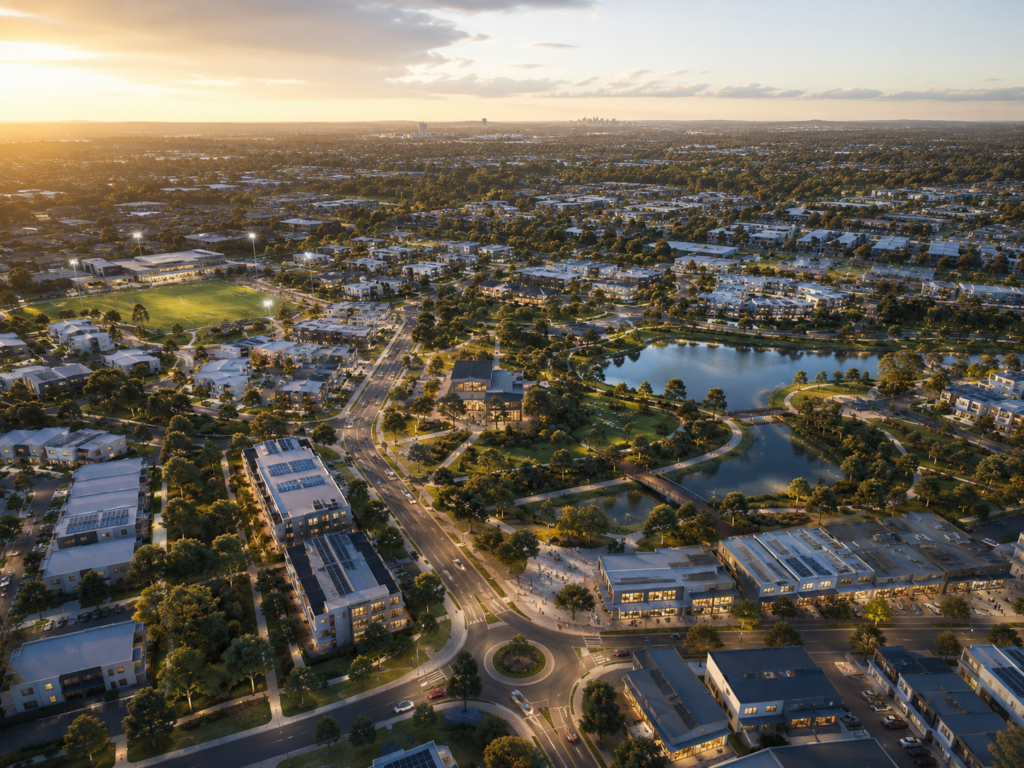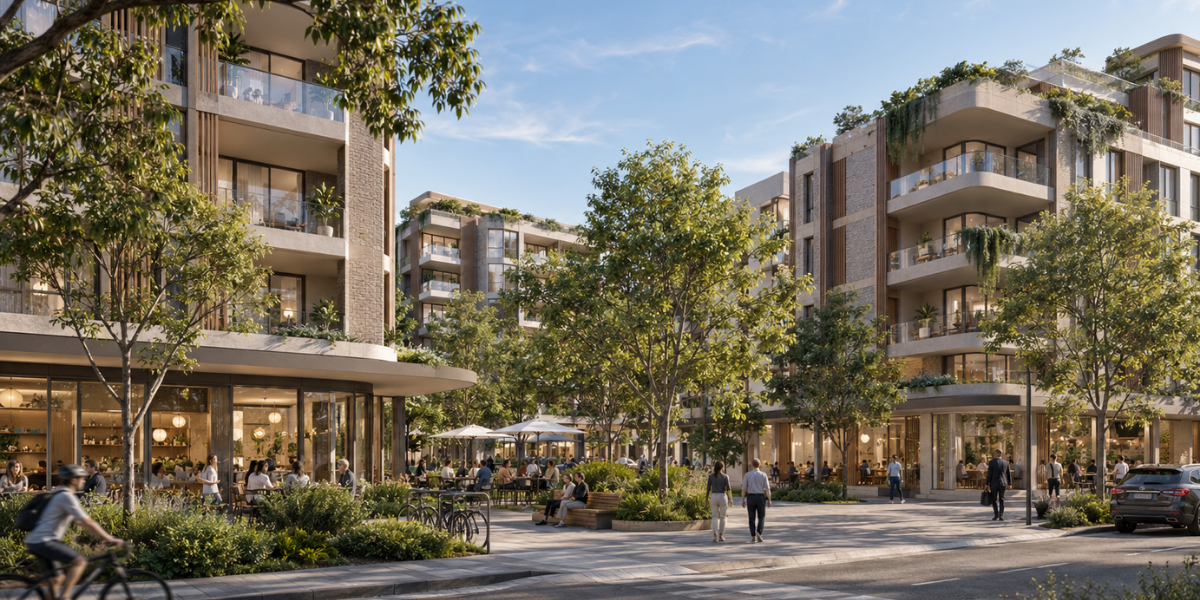
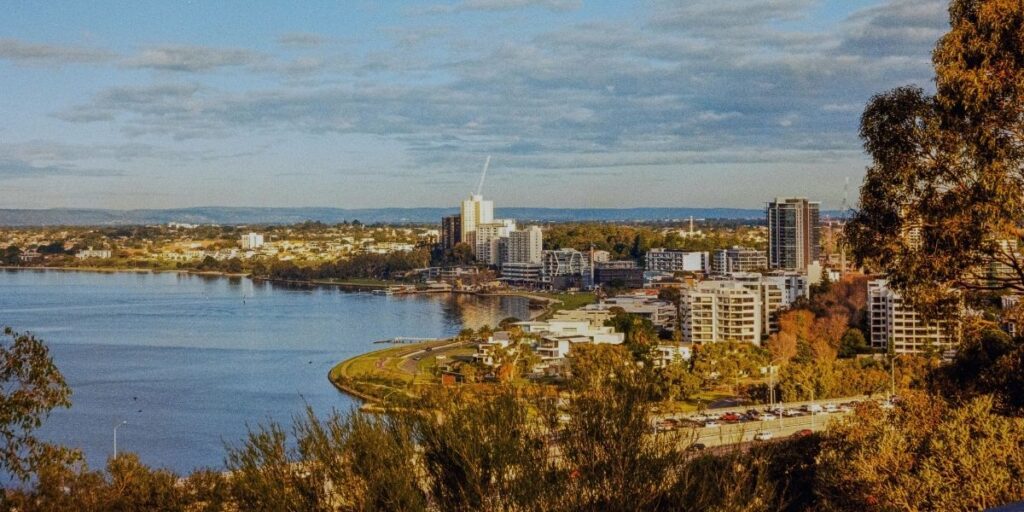
Mixed-use development is inherently complex. A single project can contain apartments, retail tenancies, food and beverage, co-working, public realm and shared amenity, each with a different audience, a different commercial purpose and a different set of things a buyer or tenant needs to believe before they commit. That complexity is also where the marketing challenge lives: without a clear place narrative, a mixed-use project risks communicating separately to each of its audiences rather than coherently to all of them.
A place narrative is the unifying idea that makes a mixed-use development legible as a single proposition. It is the story that answers, for every audience simultaneously: what kind of place is this, and why does it exist? When that story is clear, the residential campaign, the retail leasing material and the lifestyle content can all draw from the same well. When it is absent, those streams of communication diverge, and the project starts to feel fragmented, even when the product is strong.
Getting this right is not primarily a creative problem. It is a strategic one.
The Problem with Audience Fragmentation in Mixed-Use Projects
Most mixed-use projects are developed with distinct commercial objectives: sell the residential component, lease the retail, attract a food and beverage anchor, generate foot traffic that supports all three. The instinct is to market each stream separately, residential-focused creative for buyers, commercial-focused messaging for retailers. In practice, this produces a project that does not add up to more than its parts.
Residential buyers in mixed-use projects are not buying an apartment. They are buying a version of urban life, one that includes ground-floor activation, neighbourhood energy and a curated set of daily conveniences within reach. If the retail and lifestyle dimension of the project does not feel coherent and intentional, it undermines the residential proposition. The two are not separate marketing problems; they are the same place story, told to different audiences.
Place narrative: the unifying story that defines what a mixed-use development is, how its components relate to each other and why the whole is more valuable than any individual use.
Audience segmentation matters, the messaging for a residential buyer will differ from that directed at a retail tenant. But segmentation should sit within a shared place story, not replace it.
What a Place Narrative Does for a Mixed-Use Project
A strong place narrative does several things that campaign-level messaging cannot do on its own. It establishes the project’s identity before any individual use is communicated, creating a context in which apartments, retail and lifestyle content all feel like they belong to the same world. It also gives each audience a reason to believe in the project as a whole, not just in the component they are buying or leasing.
For retail tenants and food and beverage operators, the place narrative is the thing that tells them who their customer will be and what kind of community the project is building. For residential buyers, it explains why the ground floor activation is not incidental but integral to the lifestyle the project is selling. For the development team, it is the brief that keeps brand, marketing and leasing aligned through a long and complex project delivery.
Projects that invest in a clear place narrative before their marketing begins tend to produce more consistent communication across all channels and they tend to attract audiences who are more genuinely aligned with what the project offers, which reduces friction in both the sales and leasing processes.
Building the Narrative Before the Campaign Begins
The place narrative for a mixed-use project needs to be established in the strategy phase, not the creative phase. By the time a brand is being designed or a campaign is being briefed, it is too late to define what the project fundamentally is, those decisions have already been made implicitly, and they may not be the right ones. The narrative has to come first, because everything that follows — naming, visual identity, leasing collateral, sales tools, digital content — is an expression of it.
This means asking the right questions early: What experience does this development create at ground level? Who are the people who will inhabit it, and what does their daily life look like within it? How does the mix of uses reinforce rather than compete with each other? What does this place offer that nearby developments do not? The answers to those questions are the raw material of a place narrative and getting them right requires genuine engagement with the project, the site and the market, not a brief from a brochure.
Mixed-use developments are among the most interesting and commercially complex projects in the residential market. They deserve a story that is equal to that complexity, one that holds the whole project together and gives every audience a reason to believe in it.
Working on a mixed-use project and looking to establish the story before the campaign begins?
See how Colony Placemaker approaches place narrative and brand strategy for mixed-use and residential developments across Brisbane and SEQ.