Property Marketing in the AI Era is no longer just about Visibility
For years, property marketing has largely been measured by reach. More impressions. More clicks. More leads. More display ads. More listings seen by more people. But the way people discover property, places and brands is changing rapidly.
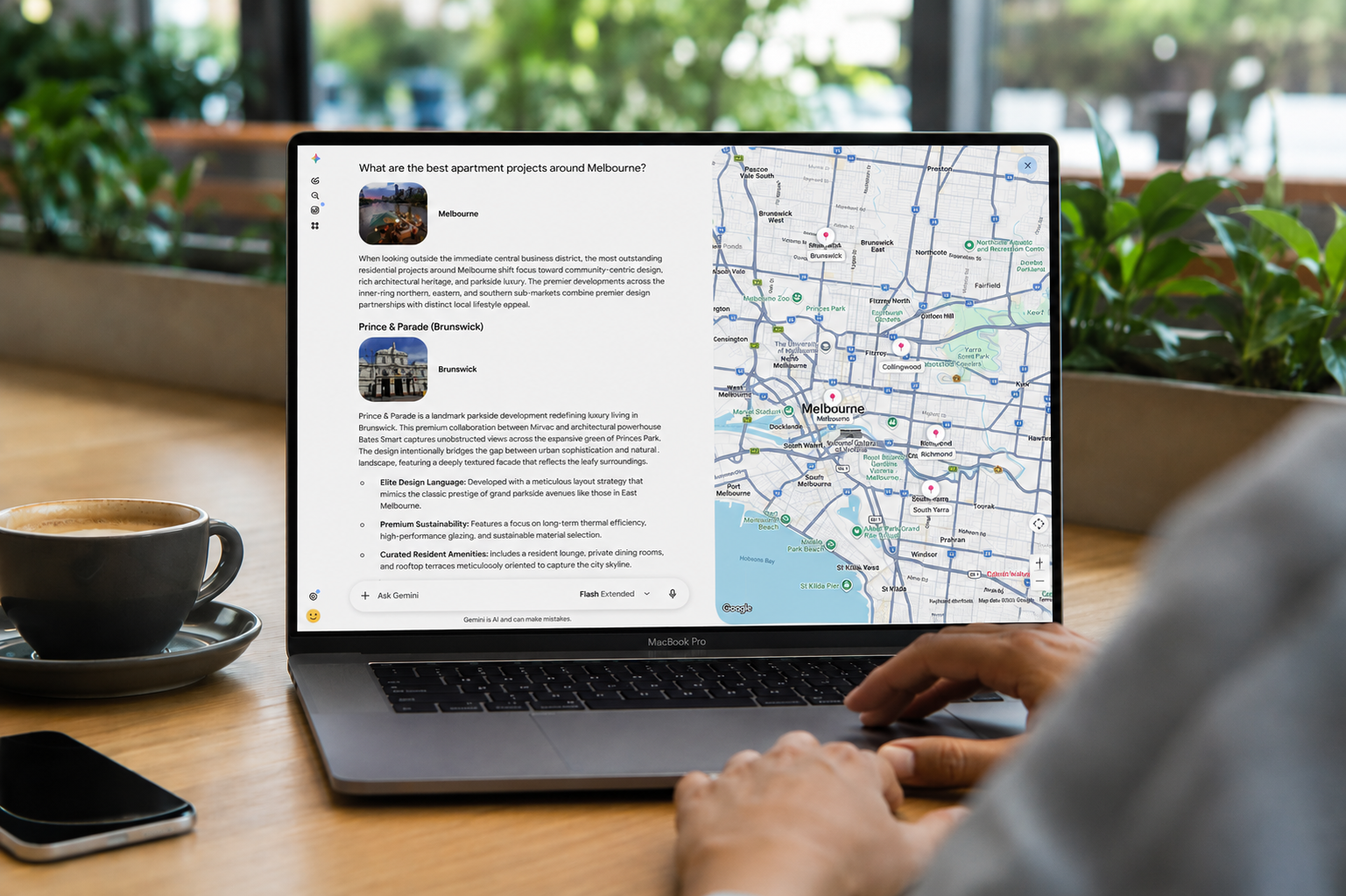
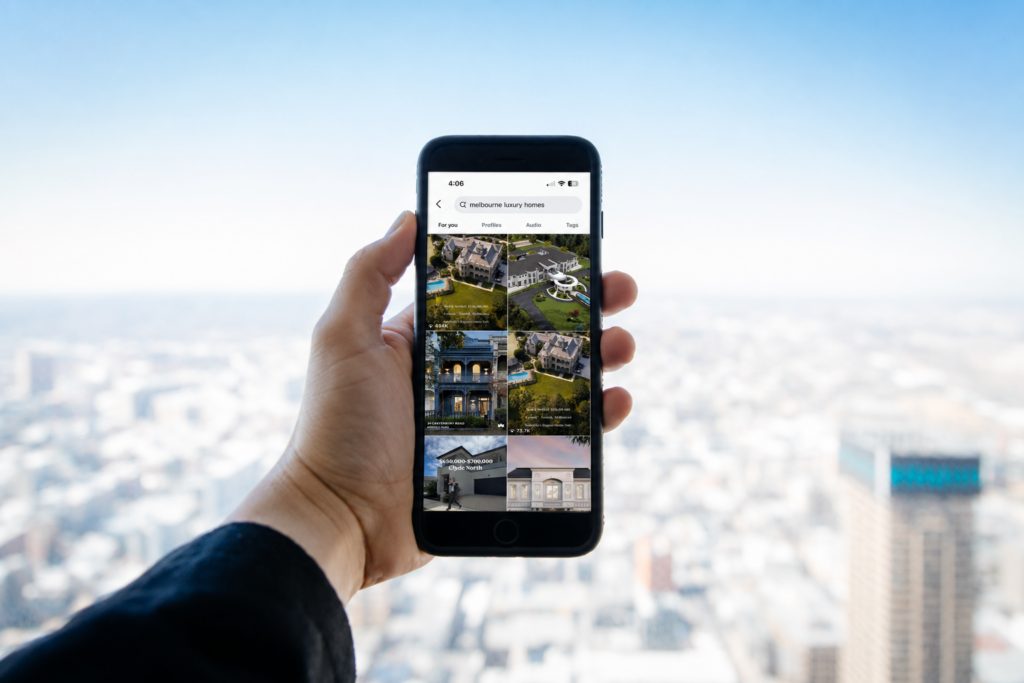
Search behaviour is shifting away from traditional keyword searches and moving towards conversational discovery. Buyers are asking AI-powered tools for recommendations, comparing suburbs through summaries, exploring developments through social content and forming opinions before they ever visit a display suite or enquiry form.
At the same time, developers are navigating a market shaped by rising expectations, slower buyer confidence, increased competition and growing pressure to create places that feel meaningful, not just marketable.
This is where the next era of property marketing begins. Not simply through more advertising, but through stronger positioning, clearer storytelling, smarter digital visibility and more connected customer experiences.
AI Is Changing Discovery, Not Just Content Creation
Much of the conversation around AI marketing focuses on content creation. But the bigger shift is actually how buyers search and discover projects.
Search behaviour is becoming more conversational and intent-driven.
Instead of typing short keywords into Google, buyers are increasingly asking broader questions through AI-powered tools and search experiences, such as:
- “What are the best apartment projects in Melbourne?”
- “Which Brisbane suburbs are good for downsizers?”
- “What should I look for in a masterplanned community?”
This is where concepts such as GEO and AEO are becoming increasingly important for property developers and property marketing agencies.
- GEO (Generative Engine Optimisation): Structuring content so AI platforms can reference it as a trusted source.
- AEO (Answer Engine Optimisation): Creating content designed to answer real user questions clearly and directly.
For developers, this means visibility is no longer limited to ranking on Google alone.
Placemaking Marketing Matters More in Competitive Markets
As residential and mixed-use projects compete harder for attention, branding alone is no longer enough.
Buyers are increasingly drawn towards projects that communicate:
- identity,
- lifestyle,
- community value,
- and emotional relevance.
This is where placemaking marketing becomes increasingly important.
The strongest developments often feel cohesive across every touchpoint. The website, campaign messaging, renders, signage, social content and sales experience all reinforce the same sense of place.
That consistency builds familiarity and trust.
And in uncertain markets, trust becomes one of the most valuable marketing assets a developer can have.
Successful property marketing strategy is no longer only about selling apartments, land or retail space. It is about helping people understand how a place may fit into their future lifestyle.
The Next Phase of Property Marketing
Property marketing is entering a structural transition.
Historically, digital strategies focused heavily on traffic acquisition through paid media, search rankings and lead generation funnels.
Increasingly, however, digital performance is being influenced by how effectively projects integrate across broader discovery ecosystems.
As AI platforms continue evolving, discoverability will rely less on isolated campaigns and more on interconnected information architecture.
Projects with stronger digital ecosystems will become easier for platforms to interpret, categorise and recommend.
That creates a growing advantage for developers investing in:
- structured content strategies,
- integrated SEO, GEO and AEO frameworks,
- consistent place narratives,
- and audience-focused digital experiences.
The next phase of AI property marketing is unlikely to be defined by who produces the most content. It will be shaped by which projects create the strongest alignment between:
- audience intent,
- digital discoverability,
- brand positioning,
- and place identity.
Because increasingly, visibility is not only determined by advertising budget, it is determined by how effectively a project can be understood, contextualised and recommended across evolving search and AI ecosystems.
Looking to position your project for the next era of property discovery?
Explore how Colony Placemaker helps developers create connected marketing ecosystems built for visibility, positioning and long-term relevance.